Compare hotel rooms and cruise cabins beyond the photo
Match bedding, usable space, location, access needs, assignment rules, and upgrade costs before treating two room or cabin offers as equivalent.
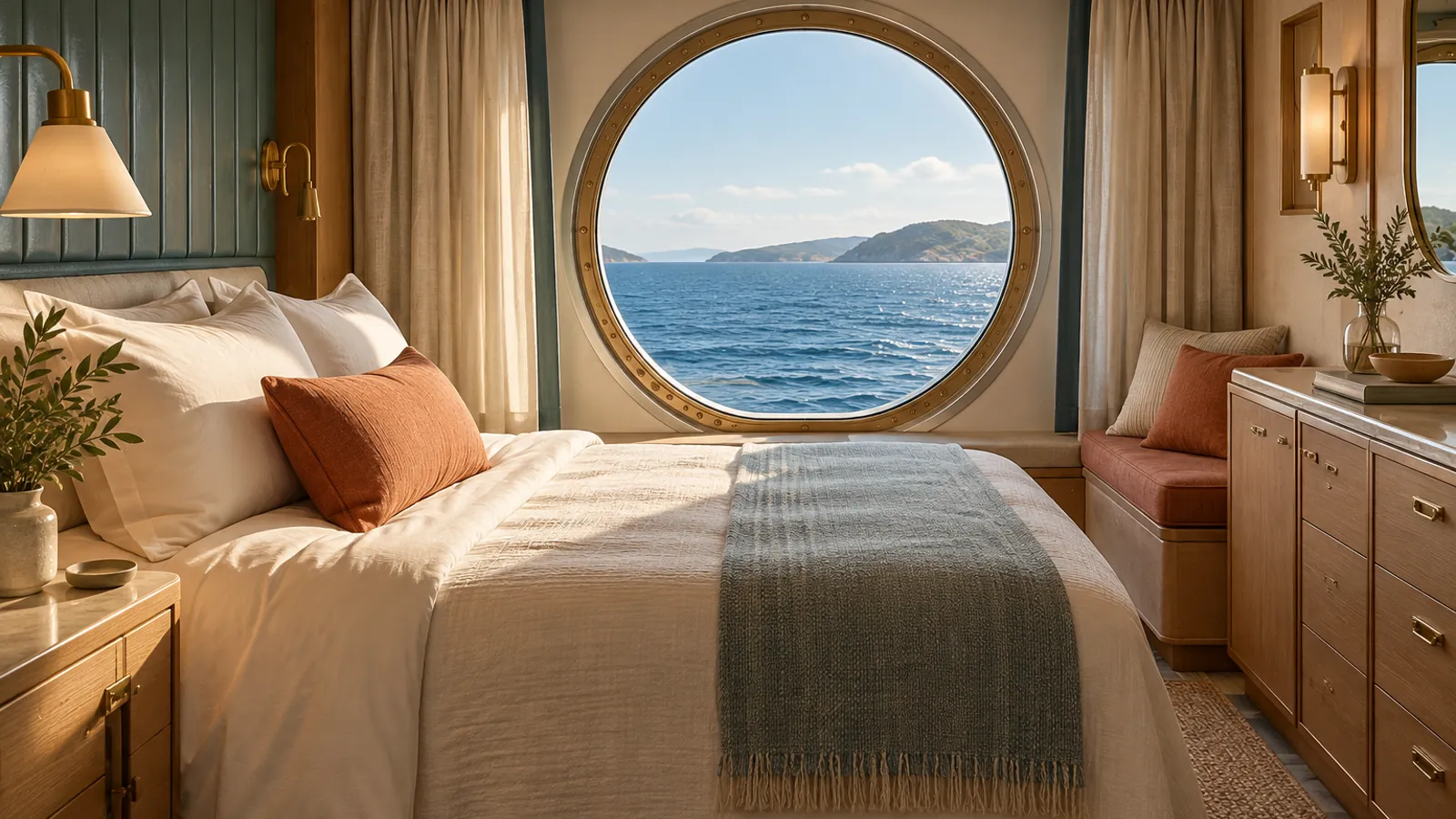
Two accommodation offers are comparable only when their practical features fit the same needs. A room photograph does not establish bed arrangement, cabin position, accessible features, or the exact category you will receive. Write down the features you require, verify the category in the quote, and treat upgrades as a separate choice rather than letting a low starting price define an unsuitable trip.
Define your minimum usable accommodation
Start with the number of people and the sleeping setup. Decide whether each traveler needs a separate bed, whether a sofa bed is acceptable, and whether a cot or other arrangement has been confirmed. A room's permitted occupancy is not a promise that every occupant receives the kind of bed they prefer. Ask the property or cruise line for the arrangement attached to the actual category.
Consider the way your party uses the room. Early sleepers, people working during the trip, and travelers carrying mobility equipment may value layout differently. A category name that sounds spacious is not a measurement. Request dimensions or a relevant plan when space is essential, and clarify whether a balcony or bathroom is counted in a quoted area.
Distinguish requirements from preferences before looking at upgrade prices. An accessible bathroom may be essential; a particular view may be optional. If a required feature is not confirmed, the offer is not ready for a price comparison. A discount cannot repair a room that your party cannot safely or comfortably use.
Compare assignment promises
Ask whether the quote confirms a specific room or cabin, a category, or a category to be assigned later. Each is a different level of certainty. A category guarantee should be read according to its own terms, including what location, bedding, view, or upgrade discretion remains with the supplier. Do not infer a particular assignment from a promotional photograph.
| Feature | Record in your comparison |
|---|---|
| Sleeping arrangement | Bed types and arrangements confirmed for your party |
| Assignment | Specific number, chosen category, or later allocation |
| Location | Floor or deck, relevant nearby spaces, access route |
| View | Exact description and any obstruction wording |
| Bathroom | Confirmed features essential to your needs |
| Outdoor area | Whether private outdoor space is included |
| Change conditions | What happens if the category or assignment changes |
Keep the supplier's wording in your notes. Replacing a precise description with “standard room” can lose the distinction you were trying to preserve. If a travel agent summarizes the offer, ask for the underlying supplier category and confirmation as well.
Put an upgrade into the whole budget
Suppose an illustrative hotel upgrade adds $35 per room per night for five nights. For one room, that is $175 before any additional taxes that the actual quote identifies. For two rooms, it is $350. Compare the final payment difference, not just the nightly increment. Do not invent a tax percentage to finish the example; use the seller's revised total.
For a cruise, imagine an illustrative category change adds $240 per passenger for two travelers. The fare increase is $480 for the sailing. If the revised fare changes inclusions, deposits, or cancellation conditions, those differences belong beside the $480. The same word “upgrade” can describe a different location or category promise rather than a simple improvement in every feature.
Ask what the extra spend replaces or improves for your actual trip. If you expect to be away from the room most of the day, a view may matter less than bed setup. If resting in the accommodation is central to the trip, it may matter more. This is a personal value decision, not a provider ranking.
Verify access needs directly
When accessibility matters, discuss specific needs with the supplier through a verified channel. A broad accessibility label cannot answer every question about door widths, bathroom setup, turning space, thresholds, lifts, or assistance arrangements. Ask for the features relevant to the traveler rather than relying on a generic symbol in a search filter.
Consider the route as well as the room. Transfers, terminal access, embarkation, public areas, and shore arrangements can affect whether the trip works. A suitable cabin does not establish that every excursion is suitable. Confirm each essential part of the plan and retain the written answers with the booking.
Avoid sharing unnecessary medical details through an unverified seller or general website form. Provide information through the supplier's appropriate process and seek individual professional advice where needed. This guide is a planning checklist, not an accessibility certification or a medical assessment.
Keep the final confirmation aligned with the quote
Before payment, read the confirmation preview or booking summary. Check that the category, occupancy, dates, and required features match the offer you evaluated. After booking, review the actual supplier confirmation promptly. A quote can be accurate while a later booking entry contains an error, and noticing a discrepancy early gives you a clearer opportunity to ask for correction.
Save the category description and relevant correspondence, not only the receipt. If the supplier changes an assignment later, compare the new proposal with the documented requirements. Ask for an explanation and available options. Do not assume that a higher category label necessarily resolves a location or accessibility concern.
Use the before-you-pay checklist to keep accommodation questions visible alongside the price. Revisit the budget only after the category is clear. Otherwise you may be comparing a fully specified room with an attractive but unresolved starting offer.
FAQ
Is a higher category always better?
Not for every traveler. Location, layout, noise concerns, and access needs may matter more than the category hierarchy. Compare the actual features you will receive.
Can a promotional photo establish the room I will get?
No. Treat photographs as illustrations unless the supplier explicitly connects them to your specific assignment. The written category and confirmation are the useful comparison record.
Should I accept an unassigned category to save money?
Only if the range of possible assignments under the terms meets your requirements. If a particular feature is essential, resolve it in writing before accepting uncertainty.
Sources
- Federal Maritime Commission passenger assistance — official explanation of the agency's limited role; cabin questions are principally supplier-contract matters.
Return to hotel and cruise comparison, and review occupancy pricing and flexible booking terms.